Driven by the 2013 physical assault on a California substation, the NERC CIP 14 regulation has reshaped the way energy’s physical security directors are viewing perimeter security.
- By Craig Summers
- Dec 01, 2019
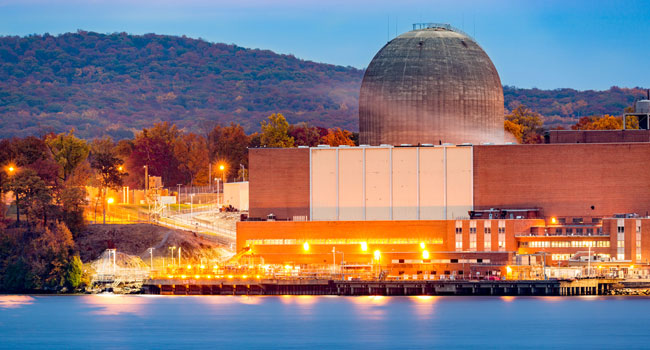
You are on duty at a large power station when you hear a gunshot coming from the South side of the facility. This shot triggers your security systems sniper detection alarm.
- By Brittany Lauridsen
- Feb 01, 2016
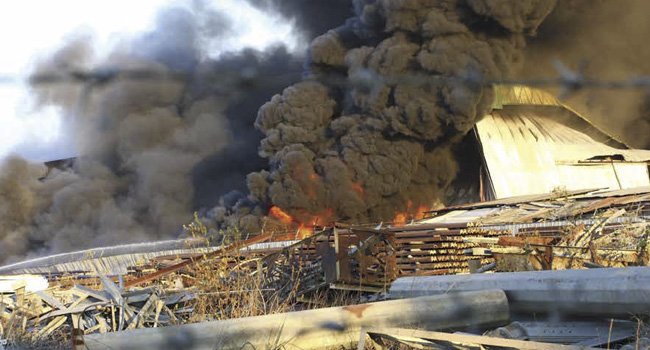
In the weeks following the massive explosion at a warehouse owned by Ruihai International Logistics in the Chinese port of Tianjin, investigators are getting a better idea of what led to the disaster that killed 173 people—104 of whom were firefighters—and injured hundreds more.
- By Glenn Trout
- Dec 01, 2015

To support safety and notify personnel in the case of an emergency, Peru LNG’s needed a general alarm and mass notification system (MNS).
- By Marla Moran
- Aug 26, 2015

When officials at the United Illuminating Co., a regional energy distribution company in New Haven, Conn., planned the recent completion of their 56-acre corporate headquarters, their “must-have” list included a campus-wide Emergency Communications System (ECS).
- By David George
- Aug 01, 2014
The Tuscaloosa Department of Transportation received federal funding for traffic message boards and cameras. Using its bucket trucks and technicians, Tuscaloosa’s DOT began installing cameras at high-volume intersections across the city.
- By Christopher Lindenau
- Dec 01, 2013
“Congress and the Administration have an opportunity to build on the chemical industry’s initiatives to enhance security by improving implementation of the Chemical Facilities Anti-Terrorism Standards (CFATS).”

As a key congressional panel examined the implementation of the nation’s chemical security rules, the Society of Chemical Manufacturers and Affiliates (SOCMA) expressed its support for stronger federal oversight...

The security professional needs help from a process safety expert to understand and prioritize what needs to be protected on the site.
- By Mark F. Smith, Deidre L. Tate
- Jan 18, 2012

In October 2006, the Department of Homeland Security Appropriations Act of 2007 became law. Section 550 of the Act ordered the Department of Homeland Security (DHS) to...
- By Carlos Barbosa
- Nov 29, 2011
Knowing the identity of workers and monitoring their access to various operations are key capabilities required to meet Chemical Facility Anti-Terrorism Standards (CFATS). Several of the Department of Homeland Security (DHS)'s 18 Risk-Based Performance Standards (RBPS), which were formulated to ensure protection of chemical facilities, specifically mention the need for comprehensive monitoring of employee identity and control of access to critical areas.
The U.S. Department of Homeland Security developed the Chemical Facility Anti-Terrorism Standards (CFATS), a comprehensive set of security regulations governing chemical facilities, to ensure companies that manufacture, store and transport chemicals are properly secured. While various technologies can play a role to protect chemical facilities, CFATS does not specify which should be used or how. Instead, CFATS specifies 18 Risk-Based Performance Standards (RBPS) to guide chemical facilities in selecting and implementing appropriate protective measures to reduce vulnerability and manage risk.
- By John Romanowich
- Nov 29, 2011
Although the calendar says November, it’s beginning to feel like Groundhog Day for a lot of chemical manufacturers across the country that are again waiting on Washington to permanently reauthorize the nation’s chemical security rules.
You can imagine how difficult it would be to secure an oil and gas pipeline than runs 50 or 60 miles. Multiply that distance by 20, and the security costs alone would be enormous -- let alone adding to the environmental impact or related safety concerns.
- By Ralph C. Jensen
- Oct 26, 2011

Earlier this month, ChemicalProcessing.com presented an ADT-sponsored webinar focused on CFATS & MTSA Security: Tips & Regulatory Updates. The hour-long webinar addressed issues that chemical plants face in an effort to comply with the anti-terrorism standards.
- By Christina Miralla
- Aug 30, 2011
In late June, the Senate Homeland Security and Governmental Affairs Committe voted 8 to 2 to approve the Continuing Chemical Facilities Antiterrorism Security Act (S. 473), spearheaded by Ranking Member Susan Collins (R-ME). The legislation would extend the Chemical Facility Anti-Terrorism Standards (CFATS) until October 2015.
With the current authority for the Chemical Facility Anti-Terrorism Standards (CFATS) set to expire in days, the Society of Chemical Manufacturers and Affiliates (SOCMA) today urged Congress to act now to ensure the program’s continued success by approving a multi-year extension.